Request to Remove Alligator Products From Gatorland Retail and Food Sale
Dear Gatorland Leadership Team,
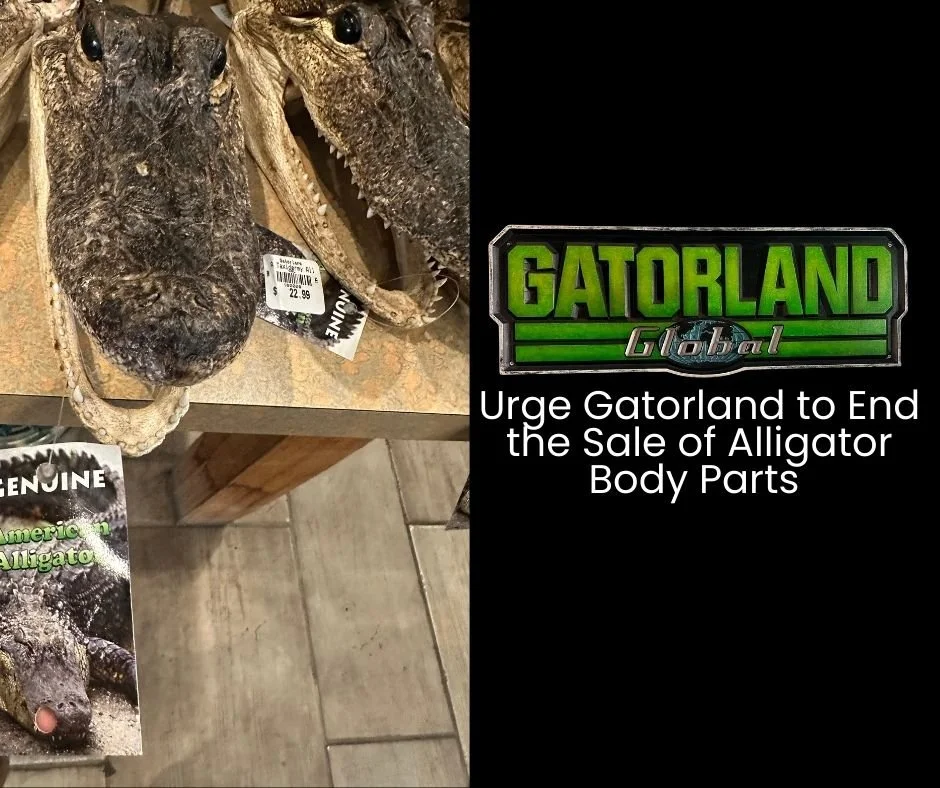
We are writing as veterinarians, veterinary professionals, and members of the public who care deeply about animal welfare, public education, and environmental stewardship. We recently visited Gatorland in Orlando, Florida. Many of us respect Gatorland’s stated mission of conservation, education, and protection, and it is in that context that we are asking you to reconsider the continued sale of alligator meat products, such as gator bites, as well as alligator heads, skulls, and feet in gift shops on your property as well as photo opportunities with customers that involve laypeople holding animals with their mouths taped shut. Taping their mouths shut and being restrained by an uneducated public are known stressors for these animals, and these practices are not aligned with your mission.
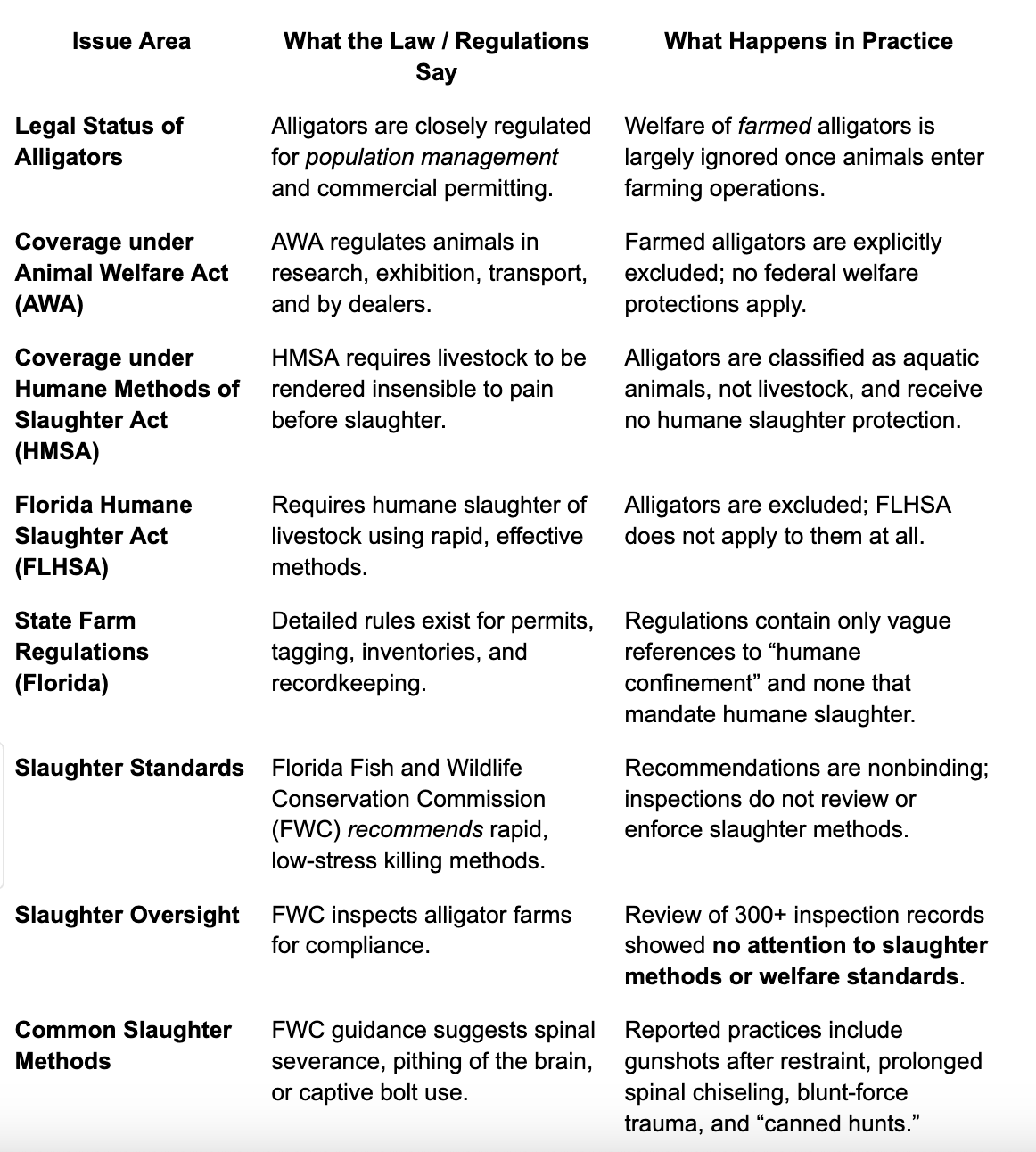
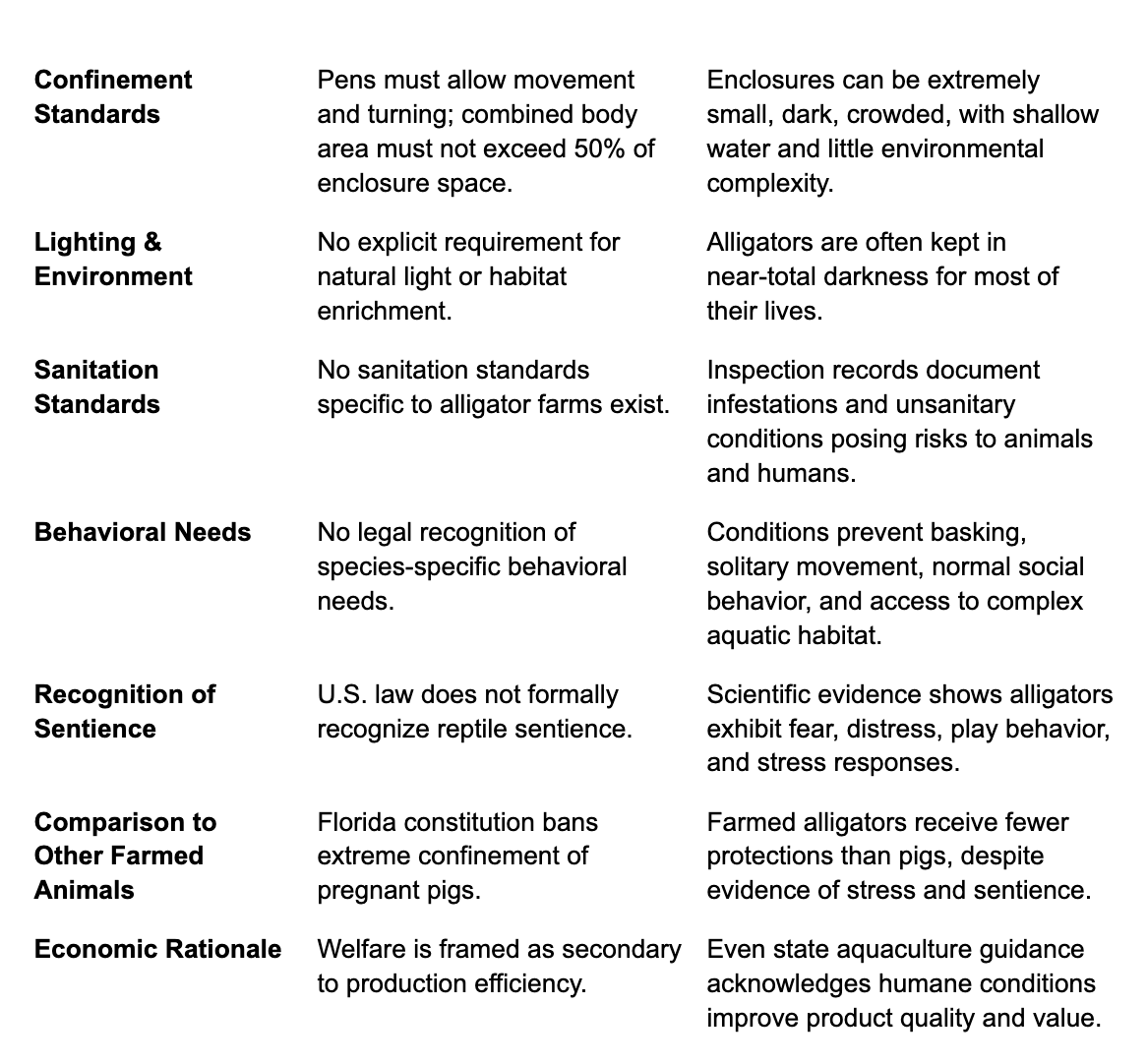
From a veterinary and scientific perspective, even though these products do not come from the alligators housed at your facility, their sourcing raises serious concerns about animal welfare, ecological harm, and the messages they convey to the public. American alligators sold for meat and novelty items in the United States originate either from captive alligator production systems or from commercial hunting operations. In both cases, the methods used to confine and end the animals’ lives present substantial welfare costs. Currently, Florida’s alligator farming industry operates in a regulatory blind spot, where animals are systematically excluded from protections afforded to other farmed species.
Peer-reviewed literature and government documentation describe common slaughter methods for alligators that include captive bolt devices followed by spinal cord destruction, manual pithing, or gunshot to the brain. Studies and reviews have noted that improper placement or equipment failure can result in prolonged sensibility due to the unique neurophysiology of reptiles, including hypoxia tolerance and delayed loss of consciousness. Research published has emphasized that reptiles may retain brainstem function and reflexive responses for extended periods following traumatic injury, raising concerns about pain perception when procedures are not perfectly executed.
Alligator farming and commercial harvest not only pose documented animal welfare concerns but also environmental harms. Concentrated captive production generates nutrient-rich waste that can contaminate surrounding water systems, contributing to eutrophication and localized water quality degradation. Studies examining reptile farming systems have identified risks related to pathogen amplification, including Salmonella species, which pose occupational and public health concerns. Commercial hunting pressures, even when regulated, can alter population structure and age distribution, with downstream ecological effects in wetland ecosystems where alligators function as keystone species. Scientific literature has repeatedly highlighted the importance of preserving natural alligator behaviors and population dynamics to maintain ecosystem resilience.
Beyond these direct harms, the sale of alligator body parts as souvenirs raises additional educational concerns. Displaying heads, skulls, and feet as novelty items normalizes the reduction of sentient wildlife to commodities and undermines educational messaging about respect for animals and ecosystems. For children in particular, these products can blur the line between conservation education and commercial exploitation.
If Gatorland’s mission is truly grounded in conservation, education, and protection, then retail and food offerings should align with that mission. Zoos and wildlife parks are uniquely positioned to educate the public about the documented environmental and animal welfare costs of animal-derived products and to model alternatives that reduce harm. Providing animal-free food and eliminating wildlife-derived souvenirs would strengthen Gatorland’s credibility as an educational institution and demonstrate leadership consistent with contemporary conservation science.
We are not asking Gatorland to abandon its history or identity, but rather to evolve in step with scientific understanding and public expectations. Many institutions that center on education and conservation have already moved away from selling animal body parts and wildlife-derived foods, recognizing that such practices conflict with evidence-based stewardship.
We respectfully urge you to discontinue the sale of gator bites and alligator heads, skulls, and feet, and to instead use your platform to educate visitors about the ecological role of alligators, the documented harms associated with their commercial exploitation, and the benefits of reducing reliance on animal-derived products.
We would welcome the opportunity to engage in constructive dialogue and to share additional scientific resources if helpful. Thank you for your time and for considering this request.
Sincerely,
Crystal Heath, DVM
Executive Director of Our Honor
&
Veterinarians, Veterinary Professionals, and Animal-Loving Members of the Public