Ask the AVMA Animal Welfare Committee to Adopt a Policy for Larger Snake Enclosures
Add your name to our letter below
(scroll to the form)
Dear Members of the AVMA Animal Welfare Committee:
I am writing as a veterinarian and member of the American Veterinary Medical Association (AVMA) to respectfully urge the AVMA to adopt a formal policy opposing the housing of snakes in enclosures that do not permit them to fully extend their bodies. This request is grounded in a robust and growing scientific consensus, is consistent with policies adopted by peer veterinary organizations, and reflects the AVMA’s stated commitment to advancing animal welfare through science, education, and advocacy.
I. Scientific Consensus
The peer-reviewed literature demonstrates enclosures that prevent snakes from assuming a fully extended, straight-line body posture fail to meet their basic physiological and behavioral needs (Warwick 2019, 2021). A snake’s ability to stretch its body is an essential component of snake biology and wellbeing. More than forty distinct negative physical and behavioral conditions have been causally linked to housing snakes in spatially restrictive enclosures (Warwick, 2019). In fact, researchers have found more objective scientific evidence establishing the need for snakes to fully stretch their bodies than exists for dogs, cats, or birds—and they have identified no scientific data or peer-reviewed opinion supporting the practice of keeping snakes in enclosures where they cannot extend fully (Warwick, 2021).
A 2021 peer-reviewed study authored by nineteen leading scientists in veterinary medicine, biology, animal welfare, and herpetology comprehensively analyzed published recommendations on snake enclosure size (Warwick, 2021). Of the peer-reviewed sources examined, 25 recommended minimum enclosure sizes consistent with “one snake length” (1 x SL) or greater; only 6 recommended smaller enclosures—and none of those six recommendations were traced to scientific evidence. The study’s lead author has called for “a paradigm shift away from an erroneous belief system and toward recognizing the greater spatial needs of these reptiles” (Warwick, 2021, 2024)
A 2025 study by researchers with the New South Wales Department of Primary Industries and Regional Development Animal Welfare Unit similarly found no peer-reviewed literature recommending restrictive housing for captive snakes and concluded that “snake welfare is enhanced when the snake is given space to stretch out and explore” (Hutchings, 2025).
II. The Need for AVMA Guidance
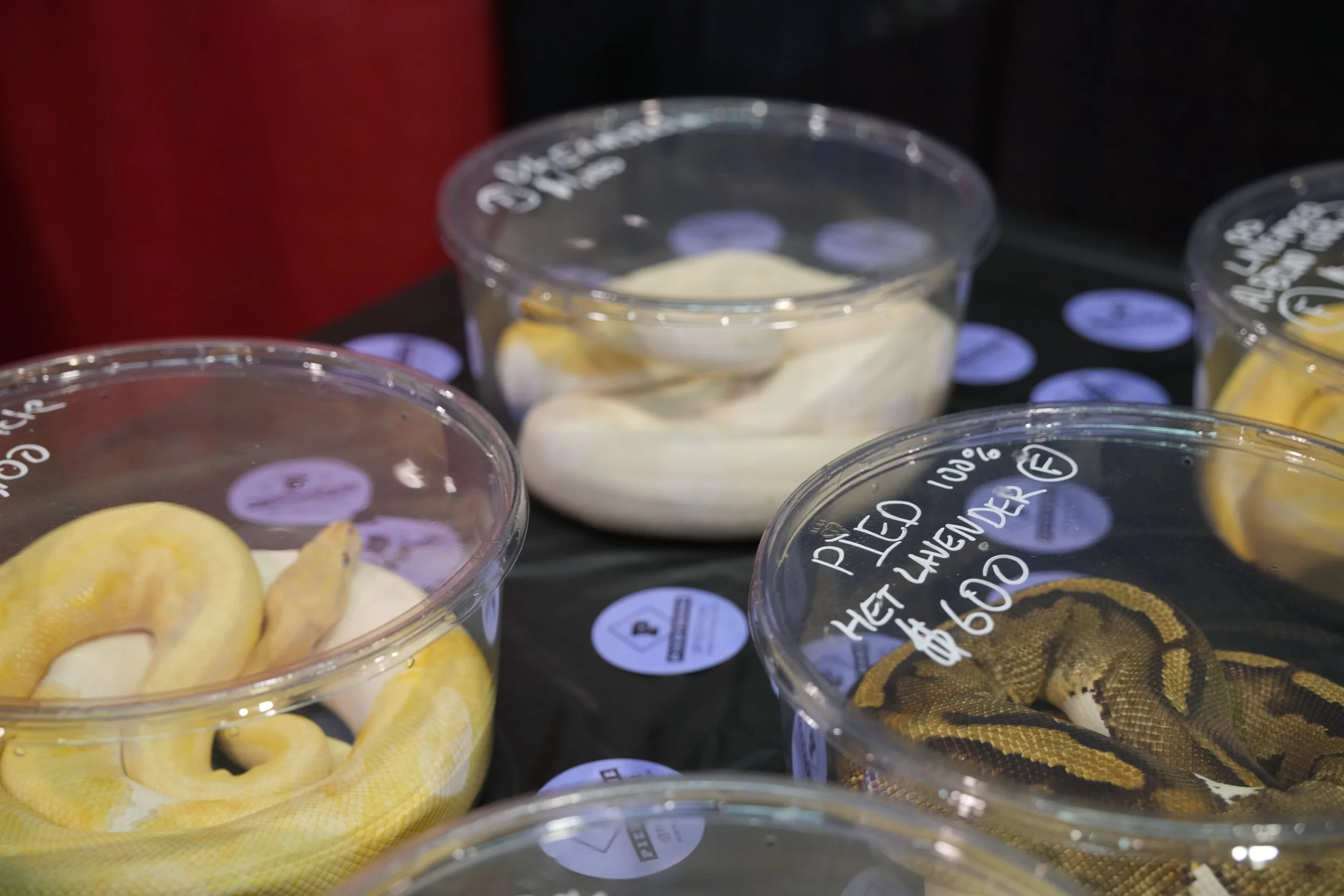
Despite this scientific consensus, substandard enclosure practices remain widespread, particularly among breeders and hobbyists. Guidance provided at point of sale is frequently inconsistent with veterinary recommendations. (Cargill, 2022; D’Cruze, 2020; Hollandt, 2021; Petco, 2025). Most state regulations either fail to address enclosure dimensions with specificity or explicitly permit enclosures shorter than the animal’s body length. This regulatory gap, compounded by the absence of a unified authoritative stance, leaves snakes vulnerable to routine, systemic welfare concerns.
In some states the regulatory landscape is beginning to shift, however it remains inconsistent. In May 2025, the Colorado Department of Agriculture adopted a landmark regulation expressly requiring that pet stores, breeders, animal rescues, and sanctuaries provide snakes enough space to fully extend (Colorado Department of Agriculture, 2025). By contrast, Louisiana’s regulations—finalized in January 2025—require only that enclosures for “snakes 8 feet in length and longer the perimeter of the enclosure shall not be less than the length of the snake, and the height of the enclosure shall not be less than twelve inches. Snakes less than 8 feet in length—minimum enclosure size shall be relative to the length of the body and tail and shall be ½ that length on the longest side” (Warwick, 2024). Regulatory outcomes are shaped by public discourse and should be based in an evidence-based understanding of animal welfare science. A clear AVMA policy would meaningfully influence snake welfare legislation and support evidence-based veterinary recommendations to the public.
III. Policies of Peer Veterinary Organizations
In developing a policy supporting appropriate enclosure size for snakes, the AVMA would not be breaking new ground—it would be catching up to its international peers. The British Veterinary Association (BVA) publicly educates that ball pythons need “enough space to stretch out in full” (British Veterinary Association). The British Small Animal Veterinary Association (BSAVA) advises that enclosures should provide “enough space for the snake to display normal behaviour, move around freely,” with a minimum diagonal no shorter than the snake’s body length. Leaders in the pet supply industry have begun to align with the science: Petco now advises that enclosures “should not be any shorter than the snake’s body length so that the snake has room to stretch out fully,” and Zoo Med Laboratories removed contrary guidance from its website following legal challenge (Petco, 2025; Showalter, 2021).
IV. Proposed AVMA Policy
I respectfully request that the AVMA adopt the following policy statement:
The AVMA opposes housing terrestrial snakes in enclosures where the length of the enclosure on the longest side is not at least equal to the length of the snake, and opposes housing arboreal snakes in enclosures where the enclosure is not at least the length of the snake in all three enclosure dimensions (length, width, and height).
Such a policy would directly advance the AVMA’s animal welfare principle that “the veterinary profession shall continually strive to improve animal health and welfare through scientific research, education, collaboration, advocacy, and the development of legislation and regulations.” It would provide veterinarians with a professional reference point when counseling clients, support advocates working to strengthen state-level regulations, and provide a clear guideline for the pet trade consistent with responsible animal husbandry.
V. Conclusion
The timing is favorable. Awareness of reptile welfare needs is growing, scientific understanding is well-established, and regulatory and commercial actors are beginning to align with the evidence. An AVMA policy statement at this moment would not merely reflect the existing consensus—it would help drive it forward.
Thank you sincerely for your consideration.
Respectfully,
[Name], [Credentials]
[Contact Information]
AVMA Member No.: [Member Number]
References:
Arena, P.C. & Warwick, C. (2023). Spatial and thermal factors. In C. Warwick, P.C. Arena, & S. Steedman (Eds.), Health and Welfare of Captive Reptiles (2nd ed., pp. 417, 425, 429–430). Springer. https://link.springer.com/book/10.1007/978-3-030-86012-7
Barten, S.L. & Fleming, G.J. (2014). Current herpetologic husbandry and products. In D.R. Mader & S.J. Divers (Eds.), Current Therapy in Reptile Medicine and Surgery (pp. 2–12). Elsevier. https://veteriankey.com/current-herpetologic-husbandry-and-products/
British Veterinary Association. (n.d.). Think twice: Is this pet right for you? https://www.bva.co.uk/take-action/our-policies/exotic-pets-non-traditional-companion-animals
British Small Animal Veterinary Association. (2023, July 14). Pet snakes in the UK – World Snake Day. https://www.bsava.com/article/pet-snakes-in-the-uk-world-snake-day/
Cargill, B.M., et al. (2022). A survey exploring the impact of housing and husbandry on pet snake welfare. Animal Welfare, 193. https://www.cambridge.org/core/services/aop-cambridge-core/content/view/7BED1DBAF7E7736788E3DEDAAC2A352D/S0962728600009969a.pdf/a-survey-exploring-the-impact-of-housing-and-husbandry-on-pet-snake-welfare.pdf
Colorado Department of Agriculture. (2025, June). Snake enclosure rule. 48 Colo. Reg. 754, 774; 8 Colo. Code Regs. § 1202-15:12.11.15 (effective July 15, 2025).
D’Cruze, N., et al. (2020). Dropping the ball? The welfare of ball pythons traded in the EU and North America. Animals, 10(3), 413. https://www.mdpi.com/2076-2615/10/3/413
Hollandt, T., et al. (2021). Animal-appropriate housing of ball pythons (Python regius)—behavior-based evaluation of two types of housing systems. PLOS ONE, 16. https://journals.plos.org/plosone/article?id=10.1371/journal.pone.0247082
Hutchings, J. & Crane, M. (2025). Recent scientific insights into the spatial needs of captive snakes. International Journal of Zoology, 5. https://onlinelibrary.wiley.com/doi/epdf/10.1155/ijz/3548045
Jepson, L. (2015). Inspecting pet shops. In Practice, 37, 333–343. https://bvajournals.onlinelibrary.wiley.com/doi/epdf/10.1136/inp.h3396
Jessop, M., et al. (2023). Evidential thresholds for species suitability in captivity. In C. Warwick, P.C. Arena, & S. Steedman (Eds.), Health and Welfare of Captive Reptiles (2nd ed., pp. 509, 514). Springer. https://link.springer.com/book/10.1007/978-3-030-86012-7
Mendyk, R.W. & Warwick, C. (2023). Arbitrary husbandry practices and misconceptions. In C. Warwick, P.C. Arena, & S. Steedman (Eds.), Health and Welfare of Captive Reptiles (2nd ed., pp. 561–582). Springer. https://link.springer.com/book/10.1007/978-3-030-86012-7
Petco. (2025, May 22). Choosing the right reptile for you. https://www.petco.com/content/content-hub/home/articlePages/new-pet/Caring-for-Pet-Reptiles.html
Rossi, J.V. (2019). General husbandry and management. In S.J. Divers & S.J. Stahl (Eds.), Mader’s Reptile and Amphibian Medicine and Surgery (pp. 109, 118–123). Elsevier. https://www.sciencedirect.com/science/article/abs/pii/B9780323482530000167
Showalter, R. (2021, June 21). Central Coast reptile supplier removes snake-care guidance after PETA lawsuit. KCBX. https://www.kcbx.org/pets-animals/2021-06-21/central-coast-reptile-supplier-removes-snake-care-guidance-after-peta-lawsuit
Spain, M.S., et al. (2020). Effects of habitat modifications on behavioral indicators of welfare for Madagascar giant hognose snakes (Leioheterodon madagascariensis). Animal Behaviour and Cognition, 7, 70–81. https://www.researchgate.net/publication/338982217_Effects_of_Habitat_Modifications_on_Behavioral_Indicators_of_Welfare_for_Madagascar_Giant_Hognose_Snakes_Leioheterodon_madagascariensis
UK Animal Welfare Committee. (2023, June 5). Opinion on the space requirements for snakes in vivaria within pet selling establishments. https://assets.publishing.service.gov.uk/media/647dc7c35f7bb700127fa45c/AWC_opinion_space_snakes_vivaria_pet_selling_establishments.pdf
Warwick, C. (1990). Reptilian ethology in captivity: Observations of some problems and evaluation of their aetiology. Applied Animal Behaviour Science, 26(3–4). https://www.sciencedirect.com/journal/applied-animal-behaviour-science/vol/26/issue/1
Warwick, C. (2023). Psychological and behavioral principles and problems. In C. Warwick, P.C. Arena, & S. Steedman (Eds.), Health and Welfare of Captive Reptiles (2nd ed., pp. 239, 267–268). Springer. https://link.springer.com/book/10.1007/978-3-030-86012-7
Warwick, C. & Steedman, C. (2023). Naturalistic versus unnaturalistic environments. In C. Warwick, P.C. Arena, & S. Steedman (Eds.), Health and Welfare of Captive Reptiles (2nd ed., pp. 487–508). Springer. https://link.springer.com/book/10.1007/978-3-030-86012-7
Warwick, C., et al. (2013). Assessing reptile welfare using behavioural criteria. In Practice, 35, 123–131. https://bvajournals.onlinelibrary.wiley.com/doi/epdf/10.1136/inp.f1197
Warwick, C., et al. (2019). Spatial considerations for captive snakes. Journal of Veterinary Behavior, 30, 37–47. https://www.sciencedirect.com/science/article/pii/S1558787818302211
Warwick, C., et al. (2021). Getting it straight: Accommodating rectilinear behavior in captive snakes—a review of recommendations and their evidence base. Animals, 11(5), 1459. https://www.mdpi.com/2076-2615/11/5/1459
Warwick, C., et al. (2024). Reptile expos: An analysis and recommendations for control. Frontiers in Animal Science, 7. https://www.frontiersin.org/journals/animal-science/articles/10.3389/fanim.2024.1335982/full
Warwick, C. (2024, September 25). Letter to Brandon J. DeCuir, Chairman, Louisiana Wildlife & Fisheries Commission. On file with PETA.