Veterinarians and Veterinary Students for Animals, Public Health, and Professional Integrity: Scholarship Contest
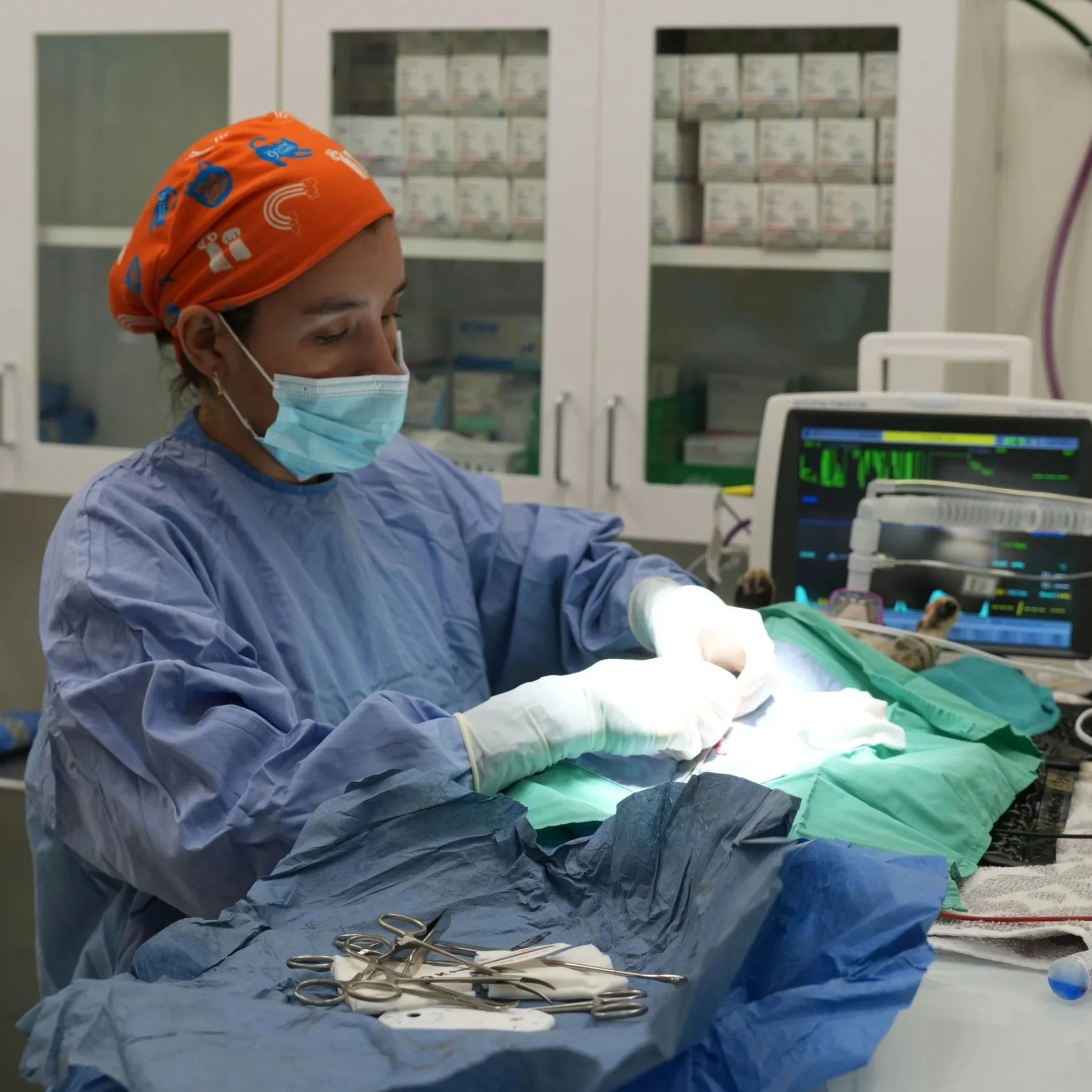
Dr. Moni Ramirez performing surgery.
Veterinary medicine requires courage.
It takes courage to learn difficult skills. It takes courage to be responsible for life-and-death decisions. It takes courage to tell the truth when our patients’ lives are at risk, and our careers are on the line. It takes courage to speak up when a system is failing and when powerful institutions ask us to accept practices we know are wrong.
Medicine has a long history of placing professionals in morally vulnerable positions. Medical trainees and clinicians have been asked to participate in systems that conflict with their consciences and are pressured to remain silent when they raise concerns. Alessandra Colaianni’s article, “A Long Shadow: Nazi Doctors, Moral Vulnerability and Contemporary Medical Culture,” argues that the participation of physicians in torture and killing is a legacy that remains underrecognized in medical education, and that contemporary medical culture still contains moral vulnerabilities worth examining. The article is an important reminder that our professional status puts us at risk of succumbing to institutional conformity.
Veterinary students are often taught to be resilient, adaptable, and professional. The dedication to professional integrity expected of veterinary professionals requires us to confront and expose harmful animal use, outdated curricula, inadequate safeguards, and policies that normalize preventable suffering.
In veterinary medicine, students encounter animal use in their training that is unnecessary, poorly justified, and inconsistent with the profession's values. They see policies from professional organizations that fail to meaningfully protect animals, public health, food security, or veterinarians themselves. They are pressured to accept what is presented as normal, even when they know the profession can do better.
This contest rewards students who think critically and speak with courage because the best veterinarians are not simply the ones who master technical skills. They are the ones who are willing to ask hard questions, stand alone when necessary, confront powerful institutions, and help change the systems they inherit.
We are looking for veterinary students who are willing to improve their schools and the profession by challenging systems and professional organizations when guidelines fall short. In doing so, you will create a future where our profession truly protects animals, supports public health and food security, respects veterinary conscience, and welcomes evidence-based dissent.
If this feels like you, please apply for the Veterinary Students for Animals, Public Health, and Professional Integrity Scholarship Contest.
Prizes
First place: $800 scholarship
Second place: $400 scholarship
Third place: $200 scholarship
Contest Prompt
Students may submit either a short essay (500-750 words) or a social media video under 3 minutes.
Choose one of the following tracks.
Track 1: Veterinary Education
Discuss a concern about your school’s harmful use of animals or the harmful use of animals in veterinary education more broadly.
Submissions may reference these public IACUC protocols, the Journal of Veterinary Medical Education public records study on cadaver and terminal animal use in U.S. and Canadian veterinary schools, and other relevant sources.
Students should explain the concern and propose a better framework for veterinary training. Suggestions may include prioritizing models, simulation, and other animal-free teaching tools before students move into supervised clinical training on animals who actually need procedures.
Submissions may also discuss how veterinary schools should expand access-to-care programs where students learn under the guidance of experienced veterinarians while helping animals and families who need veterinary services.
For cadaver use, students may propose that schools source cadavers only from animals who died naturally or were euthanized because of terminal disease, poor quality of life, or other medically necessary reasons, rather than animals killed for teaching convenience.
Questions to consider:
Does your school still end the lives of animals for student training (aka terminal labs)?
Does this animal use align with replacement, reduction, refinement, and respect, or the AAVMC Guidelines?
Were alternatives meaningfully considered?
Could the learning objective be met through models, simulation, ethically sourced cadavers, or supervised access-to-care clinical work?
Are students given transparent information before entering the course?
Are conscientious objections respected without retaliation?
What would it take for your school to become a leader in humane, high-quality veterinary education?
Track 2: AVMA Policy
Discuss one concern about an AVMA policy or guideline related to animal welfare, depopulation, slaughter, or killing methods.
Students may address one specific issue. Examples include ventilation shutdown plus, water-based foam, manual blunt force trauma, DRC-1339, fur-bearing animal killing methods, pig slaughterhouse gas chambers, lack of required cameras in gas chambers, anal electrocution of fur-bearing animals, or horse slaughter methods.
Submissions should explain why the policy is concerning and propose a framework for how the AVMA should revise its guidelines to better protect animals, public health, food security, veterinarians, and public trust in the profession.
Questions to consider:
Does the method minimize pain and distress?
What are the implications of the AVMA endorsing this method? (publicly funded indemnity payments, shielding corporations from animal cruelty laws?)
How quickly and reliably does it cause loss of consciousness?
What evidence supports or challenges the AVMA’s classification?
Are industry groups being treated as neutral authorities despite conflicts of interest?
What safeguards, transparency measures, or alternative methods should be required?
How should the AVMA revise its guidelines to protect animals, public health, food security, and veterinarians?
Submission Requirements
Students may submit either a short essay or a social media video under 3 minutes.
Essays must be 500-750 words, not including references. References should be linked in the body of the text like an op-ed.
Videos must be under 3 minutes; include screenshots of protocols, peer-reviewed sources, or AVMA policies in your video (as a green screen or B-roll). Post your video to Instagram and add @ourhonorvets as a collaborator.
Each submission should cite at least three credible sources. Sources may include peer-reviewed studies, public IACUC records, AVMA or AAVMC documents, veterinary school policies, public records, government documents, or expert statements.
Students should submit under their own name. This contest is intended to recognize veterinary students who are willing to use their voice publicly and constructively. Real progress in veterinary medicine depends on people inside the profession being willing to say, “We can do better.”
Submissions should be truthful, evidence-based, and professional in tone. When students identify harmful practices and offer evidence-based alternatives, they are strengthening the profession. Students may criticize institutions, policies, or practices, but should avoid personal attacks.
A strong submission will:
Identify one clear problem.
Have a compelling hook or angle.
Cite credible evidence.
Acknowledge the psychological, logistical, economic, and human barriers to change, and the need to overcome them with a sense of urgency.
Explain how animals, students, veterinarians, public health, food security, or public trust are affected.
Offer realistic recommendations for change.
Demonstrate the courage to speak clearly about an issue that powerful institutions may prefer to ignore.
Recommended Reading
Alessandra Colaianni, “A Long Shadow: Nazi Doctors, Moral Vulnerability and Contemporary Medical Culture,” Journal of Medical Ethics. This article examines how medical culture can place professionals in morally vulnerable positions and why medical education must grapple with institutional conformity.
Carl Elliott, The Occasional Human Sacrifice: Medical Experimentation and the Price of Saying No. Elliott’s book examines harmful medical research and the whistleblowers who spoke out, often at personal and professional cost.
Carl Elliott’s New York Times Op-Ed: In Medicine, the Morally Unthinkable Too Easily Comes to Seem Normal
A broader view on mitigating the negative psychological impacts associated with animal euthanasia
Submissions are due: October 1st, 2026
Questions: Email: Info@ourhonor.org
